City rhythm
Build a calmer routine for tier-2 city app work
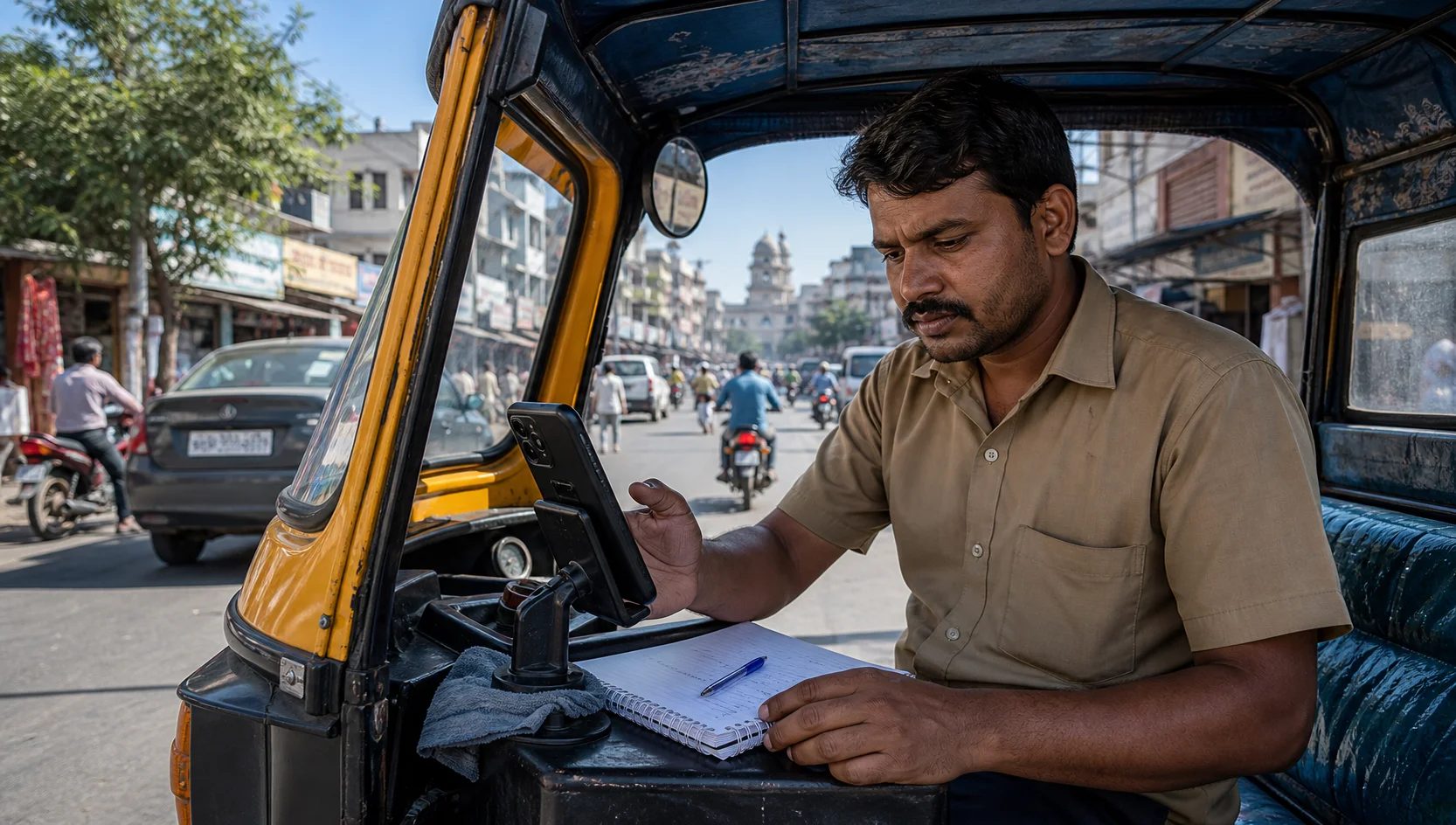
Tier-2 cities do not behave exactly like metro cities. Demand can be strong, but it often moves through markets, bus stands, hospitals, coaching areas, railway stations, and residential pockets at different times of day.
Read the city in blocks
Instead of treating the whole city as one work zone, divide it into blocks. Morning may belong to schools and offices. Afternoon may slow down near residential areas. Evening can move toward markets, railway stations, and food streets. A driver who understands these blocks wastes less time chasing random requests.
Set up before entering a busy pocket
Small city roads can become crowded quickly. Before entering a market lane or station area, check your phone setup while parked nearby. Confirm AcceptRide is active, selected apps are correct, and the screen is readable. Once traffic tightens, the phone should not need attention.
Parking matters more than speed
In many tier-2 cities, the best driver is not always the fastest driver. It is the one who knows where to wait without blocking traffic, where customers can find the vehicle easily, and where phone network is stable. Good waiting spots make alerts easier to handle.
Keep a simple history habit
At the end of each block, check what happened. Did a market area give short but useful work? Did a railway station create too much waiting? Did one route push you away from the next busy area? A short review helps tomorrow more than memory alone.
Make the routine repeatable
The goal is not to control the city. The goal is to make your own workflow calm enough to respond well. A clean phone, a known waiting spot, a checked setup, and a quick review can make tier-2 city work feel more organized.
Learn the small demand signals
In tier-2 cities, demand is often easier to read if the driver pays attention to everyday signals. A coaching center closing time, a train arrival, a wedding season route, a hospital visiting hour, a college lunch break, or a weekly market can change the whole work pattern. These signals may not look dramatic, but they matter. A driver who notices them can wait in better places and avoid empty movement.
Do not copy a metro-city strategy blindly. Smaller cities may have shorter distances, more familiar landmarks, and different customer habits. A pickup near a market may require a phone call because the customer describes a shop instead of a building number. A drop near a colony may need gate guidance. Local rhythm is part of the work.
Use landmarks instead of only maps
Maps help, but tier-2 city navigation often depends on landmarks. Drivers hear phrases like near the old cinema, behind the temple, opposite the coaching lane, beside the petrol pump, or after the second circle. Keep a mental list of these landmarks. When an address is unclear, ask one short question before moving too far. A clear landmark can save more time than driving around the same lane twice.
For auto and cab drivers, landmark knowledge helps customers trust the ride faster. For delivery riders, it reduces phone calls near the destination. For bike taxi riders, it helps avoid stopping in unsafe or inconvenient spots. The phone is useful, but local memory remains a professional tool.
Choose waiting spots by exit options
A good waiting spot is not only where demand appears. It is also where the driver can exit easily after accepting work. If you wait deep inside a congested lane, every request begins with a slow escape. If you wait on a road with no U-turn option, a nearby pickup can still become annoying. Look for places with shade, signal, parking space, and two or more exit directions.
In Rajasthan market areas, one traffic police barricade or wedding procession can change movement quickly. Keep backup waiting points. If one area becomes blocked, shift to the next known point instead of sitting in frustration. A calm driver always has a second option.
Prepare the phone before crowd pressure
Tier-2 city markets can become crowded suddenly. A quiet road at 11:30 may become difficult by 12:15. Before that pressure starts, check AcceptRide, selected apps, notification state, phone charge, and screen brightness. Do not wait until the phone is already mounted in direct sun, the customer is calling, and traffic is pushing from behind.
Small preparation is especially important for drivers using older Android phones. Older phones may slow down when maps, calls, and several work apps are active. Close unnecessary apps before entering the busiest part of the day. Keep the work screen simple.
Understand short trips and waiting time
Tier-2 cities may give many short trips. Short trips can be useful if pickup and drop are smooth. They become weak when waiting time is high, parking is poor, or the route pulls you into a blocked area. Instead of judging only by distance, judge the full effort. How long will pickup take? Is the drop near another useful zone? Will the route cross a known jam point?
Use your end-of-block review to understand which short trips helped and which ones only looked busy. AcceptRide history can support that habit by keeping the shift easier to read. The driver still has to connect the dots with local knowledge.
Respect local traffic patterns
In smaller cities, traffic can be informal. Two-wheelers may cut through narrow gaps, animals may slow roads, school traffic may stop lanes, and market loading vehicles may block one side of a street. A driver who expects perfect road behavior will feel angry all day. A driver who understands the pattern can plan around it.
Leave a little extra time when entering older city areas. Avoid unnecessary arguments at crowded pickup points. If a customer is confused, use a calm landmark-based instruction. Small-city work often rewards patience more than aggression.
Build a daily review habit
At the end of the day, divide the shift into areas. Which waiting point worked? Which area created too many calls? Which road became slow after school time? Which market gave useful short work? Which place drained battery because you waited too long with maps open? These answers make tomorrow better.
A daily review does not need a spreadsheet. Two or three notes are enough. The important thing is to stop repeating the same mistake because the day felt busy. Busy and profitable are not always the same. Organized drivers learn the difference.
A sample tier-2 city routine
Start with a phone and vehicle check before the first busy window. Choose one primary area and one backup area. Park where exit is easy. Keep the phone screen clean and the work apps selected. During the first block, avoid chasing every far request. After the block, review whether the area is still useful. If traffic changes, move before frustration builds.
This routine is simple, but it gives the driver control. AcceptRide supports the phone side of the routine, while local judgment handles roads, landmarks, customers, and timing. Together, those habits make tier-2 city work feel less random and more professional.