Address habit
Jaipur pickup address routine for auto and cab drivers
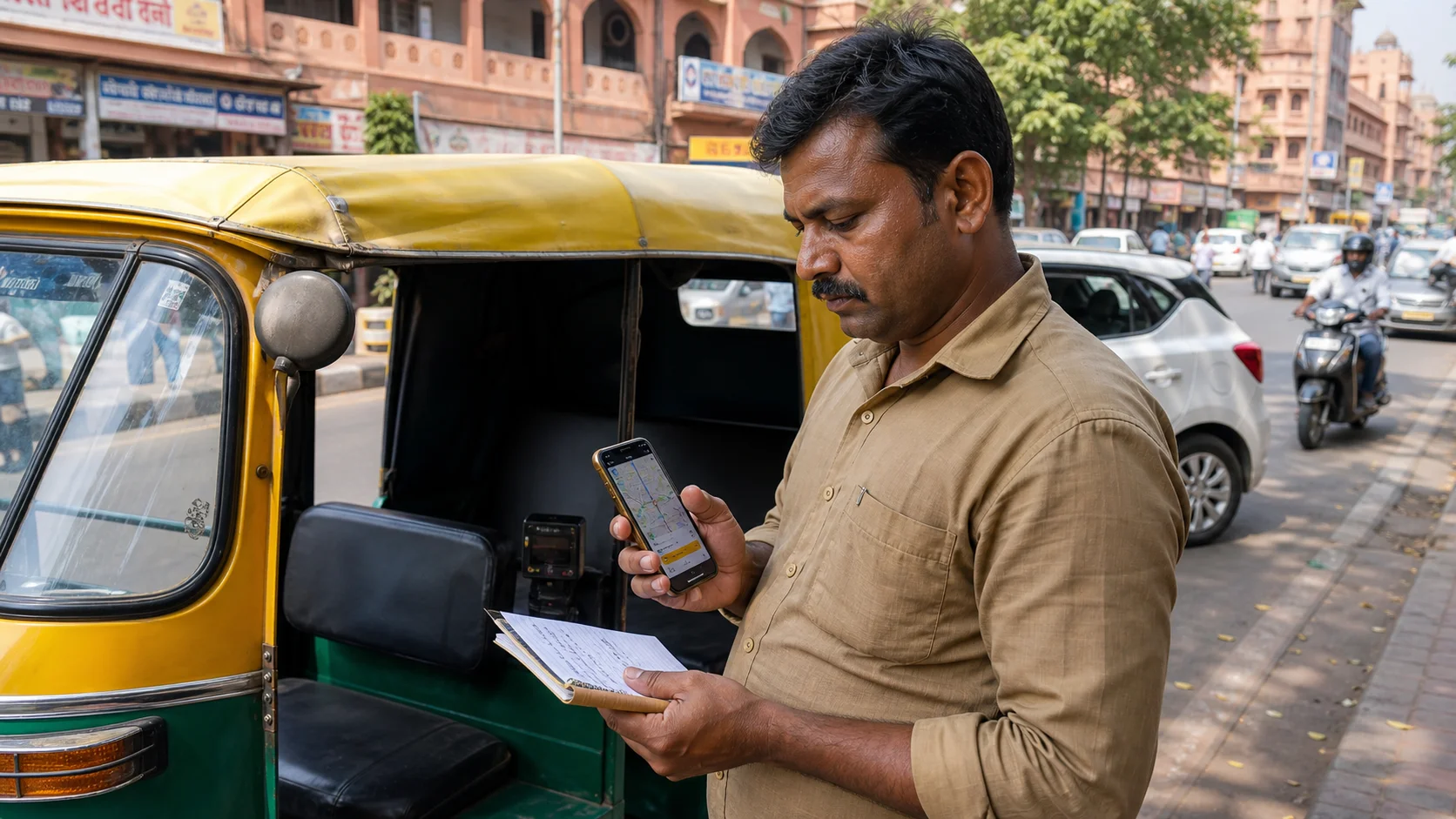
Jaipur app work can look simple on a map, but real pickup points are often described through gates, circles, markets, hotels, coaching lanes, hospitals, colonies, and old city landmarks. A driver who only follows the pin may still spend time calling the customer, turning around, or stopping in a crowded place. A better pickup address routine can reduce confusion.
This guide is useful for auto drivers, cab drivers, and bike taxi riders working around Jaipur and similar Rajasthan cities. The goal is not to replace map navigation. The goal is to combine map, landmark sense, customer message, and phone setup so pickup becomes calmer.
Read the pickup before moving
When a request comes, do not look only at the distance. Read the pickup name, area, and direction before entering traffic. If the pickup is near a mall, railway station, hospital, market, college, hotel, or residential gate, think about the easiest stopping point. Sometimes the shortest map line is not the easiest pickup path.
Use a parked moment to check the address. If you start moving without understanding the pickup, you may need to handle the phone again in traffic. AcceptRide can help keep the alert and history easy to see, but the driver still needs to make a safe route decision.
Use landmarks customers actually know
In Jaipur, many customers explain locations through practical landmarks: near metro station, opposite a gate, beside a petrol pump, behind a market, near a temple, close to a coaching center, or after a circle. If the pin seems slightly wrong, ask one short question: “Which gate or landmark should I stop near?” This is faster than making three confused calls.
Drivers should build a personal landmark memory. MI Road, C-Scheme, Vaishali Nagar, Mansarovar, Malviya Nagar, Bani Park, Tonk Road, and station areas each have their own pickup style. A driver who remembers common stopping points can finish pickups with less stress.
Avoid blocking traffic at busy pickup points
A good pickup point is not only close to the customer. It should also be safe to stop. In crowded areas, stopping exactly at the pin may block traffic or invite pressure from other vehicles. If the pin is inside a narrow lane, wait at the nearest clear corner and guide the customer politely.
This habit protects the driver and customer. It also keeps the work professional. A clean pickup is better than reaching the exact pin and creating a traffic problem.
Check drop direction early
If the app shows drop direction, glance at the rough direction before accepting or immediately after accepting, depending on your workflow. A short pickup may still lead to a long exit through traffic. In old city areas, one wrong entry can add time. Near markets, festivals, school closing time, or wedding season, route direction matters more than the map distance.
For delivery riders, this also applies to restaurant pickup and customer drop. A pickup from a busy food lane may need a different parking choice than a pickup from a quiet colony.
Keep customer calls short and clear
Many drivers lose time in long calls. Use short questions: “Which gate?” “Near which shop?” “Should I stop on main road?” “Are you inside the colony or outside?” Avoid asking five things at once. Customers often answer better when the question is simple.
If the customer sends a voice note or confusing text, stop safely before reading. Do not decode long instructions while moving. A driver who handles address issues calmly usually reaches faster than one who keeps rushing.
Prepare for weak GPS areas
In dense markets, under flyovers, or near tall buildings, GPS can jump. If the pin moves strangely, use the written address and landmark. Keep mobile data stable. If the map is slow, do not repeatedly tap around and drain attention. Sometimes one short call is better than fighting the map.
AcceptRide history can help drivers notice recurring address patterns. If one area often creates wrong pins, remember the better waiting point for next time.
Handle apartments, hotels, and hospitals differently
Every pickup type needs a slightly different approach. At apartments, ask for tower, gate, or block. At hotels, confirm lobby side or main road pickup. At hospitals, avoid blocking emergency entry and ask which gate is easiest. At coaching areas, students may gather in groups, so confirm name and exact side of the road. This sounds small, but it reduces wasted waiting time.
Drivers who work near railway station, Sindhi Camp, MI Road, Tonk Road, or busy market areas should keep a few safe pickup points in memory. If the customer is willing to walk twenty meters to a clearer stop, the pickup becomes faster for both sides. Explain politely and keep the instruction simple.
Make pickup review part of the shift
At the end of a work block, think about the pickups that wasted time. Was the pin wrong? Was the waiting point bad? Did you enter from the wrong side? Did a certain market need a different stop? This review makes tomorrow easier.
Drivers often focus only on fare and distance, but pickup quality affects earnings too. A ten-minute confused pickup can ruin a good-looking request. A two-minute clean pickup can make a normal request worthwhile.
A simple Jaipur pickup checklist
Before moving: read area, read pickup name, check landmark, check stopping safety, glance at drop direction, keep phone readable, and ask one clear question if needed. During pickup: stop safely, keep call short, confirm customer name if required, and avoid blocking the road. After pickup: remember if the spot was good or bad for next time.
This routine works because it respects both the phone and the city. Jaipur has its own rhythm. A driver who learns that rhythm, and keeps the phone setup clean, can handle app work with less confusion.