Shift stamina
Plan fuel, water, and breaks before the busy window
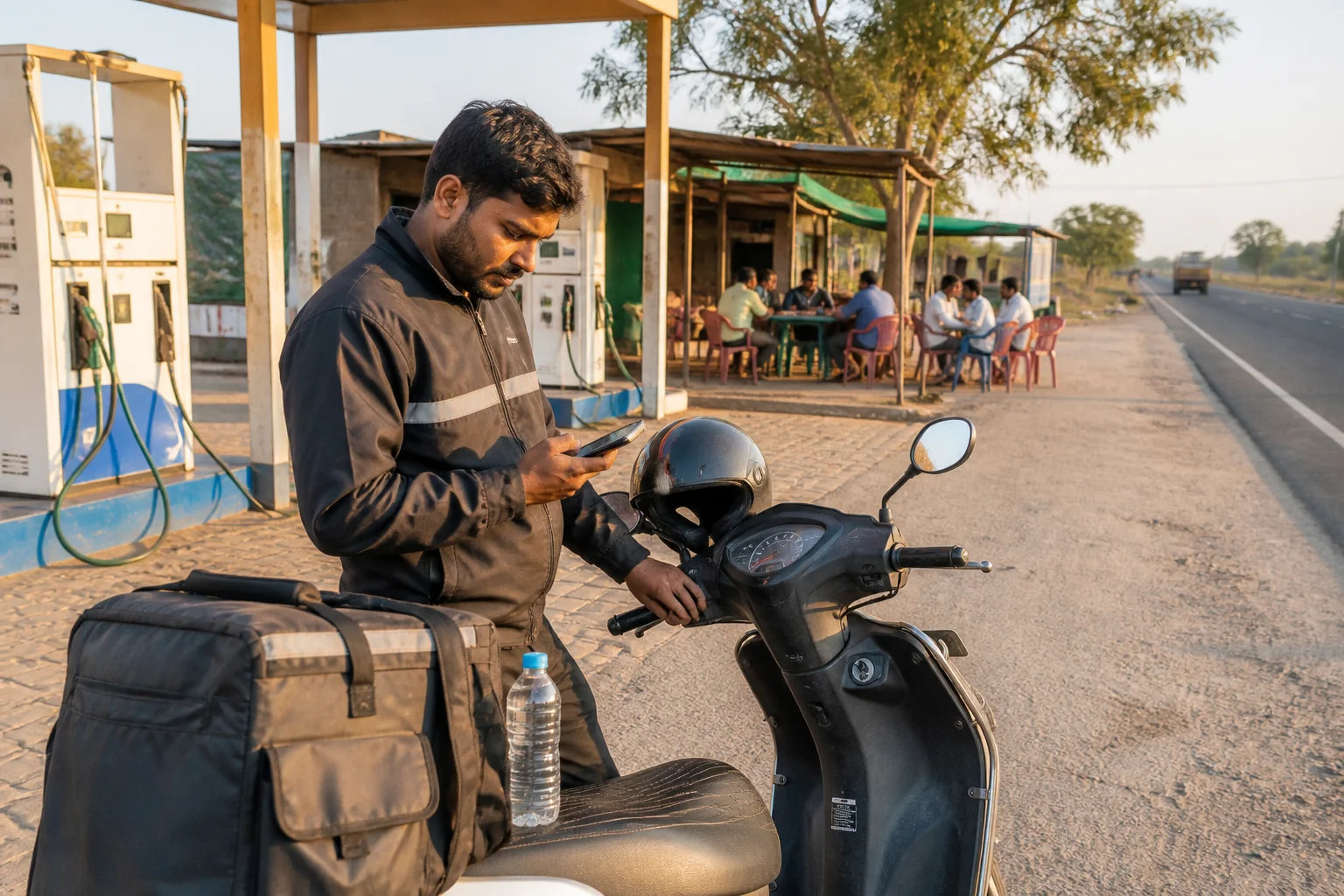
A long shift is not only about finding work. It is also about avoiding the small problems that break momentum: low fuel, low battery, no water, a missed meal, or a tired decision at the wrong time.
Fuel before demand rises
Refueling during peak demand can waste the best part of the hour. If you know lunch, evening, or office-return traffic is coming, fill up earlier. A half-empty tank may look fine at the start, but it becomes stressful when requests start pulling you away from familiar fuel stations.
Charge the phone like work equipment
Your phone is not just a phone during app-based work. It is map, alert screen, call line, payment tool, and shift record. Start with enough charge, carry a cable that actually works, and keep the charging port dry and clean. If the phone battery drops fast, reduce unnecessary background apps.
Breaks should be planned, not accidental
Drivers often take breaks only after they are already tired. A better habit is to choose a natural pause: after fuel, after a route that ends near food, or before entering a congested zone. During that pause, check AcceptRide, look at recent activity, and decide whether the next area is worth entering.
Water and heat matter
Hot weather makes drivers impatient faster. Keep water nearby and avoid waiting too long without shade. A calm driver makes better route choices, communicates better with customers, and handles phone alerts with less frustration.
Do one reset before the next block
Before going back online, check four things: fuel, phone charge, selected apps, and service status. This small reset takes less than a minute, but it prevents many avoidable problems during the busiest part of the day.
Understand your busy windows
Every city has its own rhythm. Lunch, evening office return, station arrivals, school closing time, market rush, and weekend shopping can all create different kinds of work. A driver who prepares fuel and rest before these windows starts with an advantage. A driver who refuels after demand has already started often loses the best part of the hour.
Think of the day in blocks. A morning block may need quick readiness and enough charge. A lunch block may need parking near food areas and patience with waiting time. An evening block may need full fuel, a stable phone, and a clear idea of which roads to avoid. Planning does not remove uncertainty, but it reduces the number of problems you create for yourself.
Use fuel stops as work checkpoints
A fuel stop can be more than a fuel stop. It can be the moment where you reset the phone, drink water, check the next working area, and decide whether to continue. Many drivers rush through fuel and immediately go online again. A better habit is to take one extra minute. Open the phone, confirm that AcceptRide is active, check selected work apps, and make sure the battery is still healthy.
This is also a good time to look at recent work. If the last few requests pulled you away from the area you wanted, decide whether to return or continue from the new zone. Without this pause, drivers often keep moving without a plan and later feel that the whole day became scattered.
Water is not optional
Indian weather can make dehydration feel normal. Drivers may not notice it until they become irritated, tired, or slow to react. Keep a water bottle in the vehicle and drink small amounts regularly. Do not wait until you feel very thirsty. For bike and scooter riders, heat from traffic and helmets can drain energy quickly. For cab and auto drivers, long sitting hours create a different kind of fatigue.
A tired driver often blames the phone, the app, the customer, or traffic. Sometimes the real problem is that the body needs water, food, shade, or five quiet minutes. Shift planning should include the driver, not only the vehicle and phone.
Food timing affects decisions
Skipping food during peak hours may look efficient, but it can lead to poor decisions later. Drivers become impatient, accept routes they would normally avoid, or argue over small delays. Plan one proper eating window if the shift is long. If a full meal is not possible, keep a simple snack that does not create mess in the vehicle.
Choose food stops near useful work zones when possible. If you stop far away from demand, the break becomes longer than expected. If you stop in a congested area, parking becomes stressful. The best break spot is boring: safe parking, water, network signal, shade, and a clear road back to work.
Charging strategy for long shifts
A driver phone should not reach ten percent during a busy block. That creates panic and bad choices. Charge early, not late. If you know the phone drains quickly with maps, start charging while the battery is still above fifty percent. Avoid waiting until the battery is nearly empty.
Check the cable connection after rough roads. A cable may look connected but charge slowly. If the phone becomes hot, it may stop charging even while plugged in. Keep the phone out of direct sunlight when possible. If you use a power bank, keep it charged before the shift, not as a last-minute backup.
Rest breaks protect earnings
Some drivers think a break means losing money. In reality, a short planned break can protect the next two hours of work. A driver who is tired, thirsty, or distracted may miss turns, choose bad routes, or waste time correcting mistakes. Five minutes parked in a good spot can make the next block smoother.
Use breaks to reset attention. Do not spend the whole break scrolling social media. That keeps the mind busy instead of rested. Check work status, drink water, stretch, and decide the next area. The break should make the next block clearer.
Build a practical shift kit
A simple shift kit can include a working charging cable, compact power bank, water bottle, small cloth, spare mask or handkerchief, basic cash, and any documents you commonly need. Keep the kit in the same place every day. Searching for small items during work wastes time and creates irritation.
For rainy or hot days, adjust the kit. Add a dry pouch in monsoon. Add extra water during summer. Add a small snack for long evening blocks. The goal is not to carry too much. The goal is to avoid predictable problems.
End the day with notes
After the shift, note what caused the biggest interruption. Was it fuel, battery, waiting time, hunger, network, or a weak route plan? If the same problem repeats, fix the routine. AcceptRide can help with the phone workflow, but the complete workday also depends on vehicle readiness and driver stamina.
A strong workday is built before the rush starts. Fuel, water, phone charge, selected apps, and a clear break plan may sound simple, but simple habits are the ones that survive real traffic.